
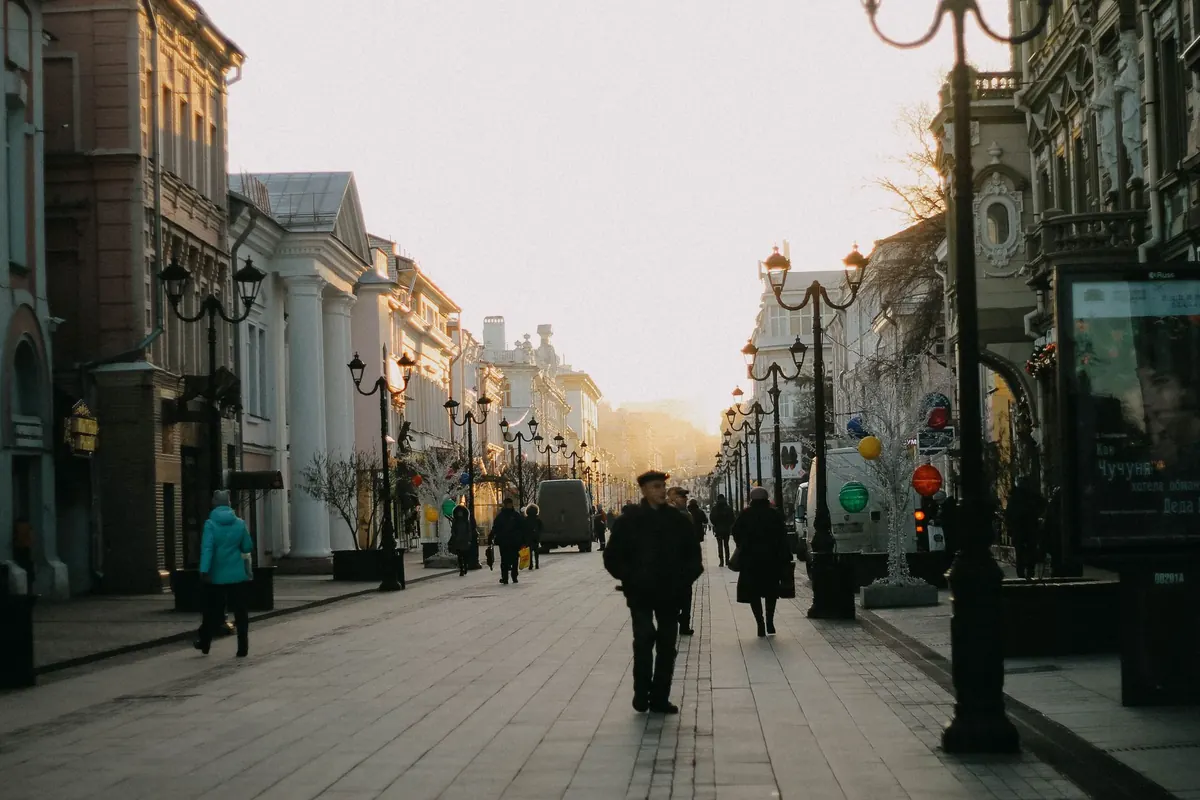

Local Poetry Walk: How to Notice Your Neighborhood Like a Poet
You do not need a mountain, a museum, or a train ticket to find material for a poem. The street outside your door will do, provided you walk it differently than you usually do. Most of us move through our neighborhoods on errands, eyes fixed on the next task. A poetry walk asks for something smaller and stranger: twenty minutes, one loop, and the willingness to be slightly bored. Boredom is where noticing starts. What follows is a way to walk the same three blocks you have walked a thousand times and come home with eight usable lines.
Set One Constraint Before You Leave
A walk without rules turns into a stroll, and a stroll rarely produces notes. Give yourself a single narrow instruction, something you can actually follow. The constraint does the work of attention for you: it decides what you are allowed to see, and in doing so it makes you see it.
Good constraints are tight enough to obey and loose enough to surprise you:
- Write down only what sits below knee height.
- Collect five sounds and three smells. Nothing visual.
- Note every place where the pavement changes.
- Follow one color for the whole walk — rust, green, hospital white.
- Record only what is temporary: chalk marks, flyers, scaffolding, spilled rice, a mattress.
Pick one and stop negotiating. Twenty minutes is enough. Forty will make you tired and vague, and vague notes are almost impossible to use later.
Bring something to write with. A cheap notebook folded into a back pocket beats a beautiful one sitting at home. Your phone works too; use the voice memo function when your hands are full, and say the detail out loud before it dissolves.
What to Collect: A Poet's Inventory
Poems are built from specifics, and specifics arrive through the body rather than the mind. You are not looking for ideas. You are looking for material. Aim for a page of fragments, not sentences — sentences will come later and will be better for the delay.
- Textures underfoot. Loose gravel, a rubber mat, a metal grate that rings. Note the exact one, not "the ground."
- Sounds with a source. A shutter coming down, a scooter idling, two men arguing in a language you half-recognize.
- Smells attached to a place. Bread, diesel, wet plaster, someone's laundry. Smell is the fastest route to memory, and memory is half of what a poem does.
- Small movements. A cat crossing with its tail up. A leaf going around a puddle instead of over it.
- Leftover objects. A single shoe. A chair on the sidewalk with its seat missing. Things people abandoned and the neighborhood absorbed.
- Overheard half-sentences. Not the whole conversation — just the fragment that lands wrong or right. "So I told him no, twice."
- Names of things. The plant, the shop, the bus line, the street. Learn three real names you did not know before.
- The light at a particular hour. Where it lands, what it makes yellow, what it makes look wet.
Write down what your body does, too. Cold hands. A shoulder tightening under a bag. A small relief when the traffic light changes. Those are the notes that keep a poem from floating away into abstraction.
Read the Street in Layers
When the walk starts to feel empty, change altitude. Most people scan the street at eye level, which is the most crowded and least interesting height. Try moving your attention up and down instead.
Ground level
Cracks, drains, gum, weeds coming up through a seam, the dry outline of a puddle. The ground holds evidence of weather and of everyone who passed before you. It is also the only part of the street nobody decorates, which makes it honest.
Eye level
Shop windows, doorways, chalkboards, the way a curtain hangs. Look for the accidental still life: three crates stacked, a mop leaning out of a bucket, a chair set out for someone who is not there yet.
Above your head
Balconies, wires, satellite dishes, laundry, satellite-cable tangles, awnings, the underside of a tree. This layer is where a neighborhood shows its age and its improvisation.
Under the noise
Stand still for one minute and let the loud sounds pass. Then listen for the quiet continuous ones: a fridge humming through a wall, water in a pipe, a distant radio. Poets work in that second layer, the one everybody else filters out.
Stay Too Long in One Ordinary Place
Pick the least promising spot on your route — a bus stop, a laundromat doorway, the bench outside a pharmacy — and stay for five minutes. Not three. Five is long enough for the first obvious observations to run out and the odd ones to arrive.
Watch what repeats. Repetition is structure. A man checking his watch four times. The same scooter circling. A sign flickering on a rhythm you can almost count. If you can count it, you can put it in a line and the line will have music in it.
From Notes to a First Draft
Do not write the poem on the street. Come home, make tea, and let the notes sit for an hour. Then read them aloud once and start trimming.
Keep the nouns, cut the adjectives
Your notes already contain the adjectives if the nouns are exact. "A plastic crate" does more work than "a sad plastic crate." Let the reader supply the feeling.
Put the verbs to work
Notice how many of your fragments are static. Push a few into motion: the shutter does not just hang, it comes down. Motion gives a poem its pulse.
Try a list poem first
The easiest way in. Ten lines, one detail each, no explaining. You will find that the order alone starts to make meaning, and two lines will quietly argue with each other. That argument is the poem.
Read the draft aloud, slowly. Where you stumble, the line is doing too much. Where you rush, it is doing too little. Rewrite only those two places and leave the rest alone for a day.
Your First Walk This Week
Choose one route you already know by heart — to the corner shop, to the bus, around the block with the dog. Walk it at a different hour than usual, so the light and the people are unfamiliar. Take one constraint from the list above and one pen. Twenty minutes, one page, no editing.
Repeat the same walk a week later with a different constraint. By the third walk you will have three pages of notes and, more usefully, a habit: the sense that your own street is not a backdrop but a text you have only just begun to read. That habit is what makes a poet, far more than any particular poem you manage to finish.
Photo: Мария / Pexels